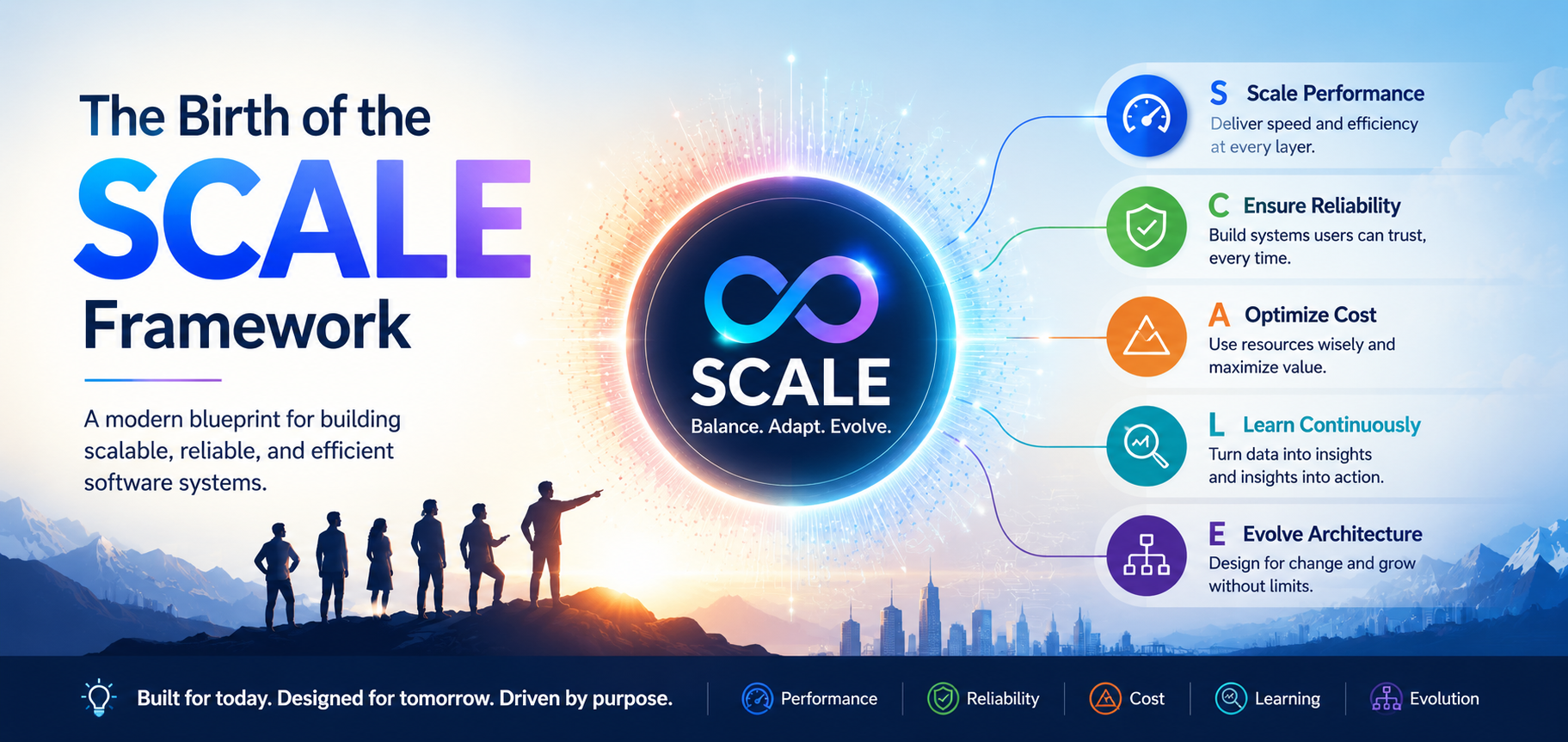
 © Ram Brij
The SCALE Framework
The Birth of the SCALE Framework
Frameworks don't emerge because someone invents an acronym. They emerge because years of experience eventually reveal a pattern that can't be ignored.
~ Ram Brij
📘 About this Series
The SCALE Framework Series explores the SCALE Framework—an original methodology for Continuous Performance Engineering developed by Ram Brij through years of enterprise software engineering and technology leadership. Each article builds on the previous one, gradually introducing the framework's philosophy, principles, and practical implementation.
You're reading: Part 3 – The Birth of the SCALE Framework
The Birth of the SCALE Framework
Why five principles became the foundation of continuous performance engineering
Every engineering framework starts with an observation. Some come out of academic research, others out of new technology or evolving industry practice. SCALE started differently not in a brainstorming session or a whiteboard workshop, but gradually, over years of building, operating, and modernizing enterprise software where performance, reliability, and customer trust were never really separate things.
Looking back across my career designing payment authorization platforms and EMVCo-certified Access Control Servers, leading cloud-native modernization efforts, running high-performing engineering teams I can't point to one project that sparked the framework. What I see instead is a pattern that kept repeating.
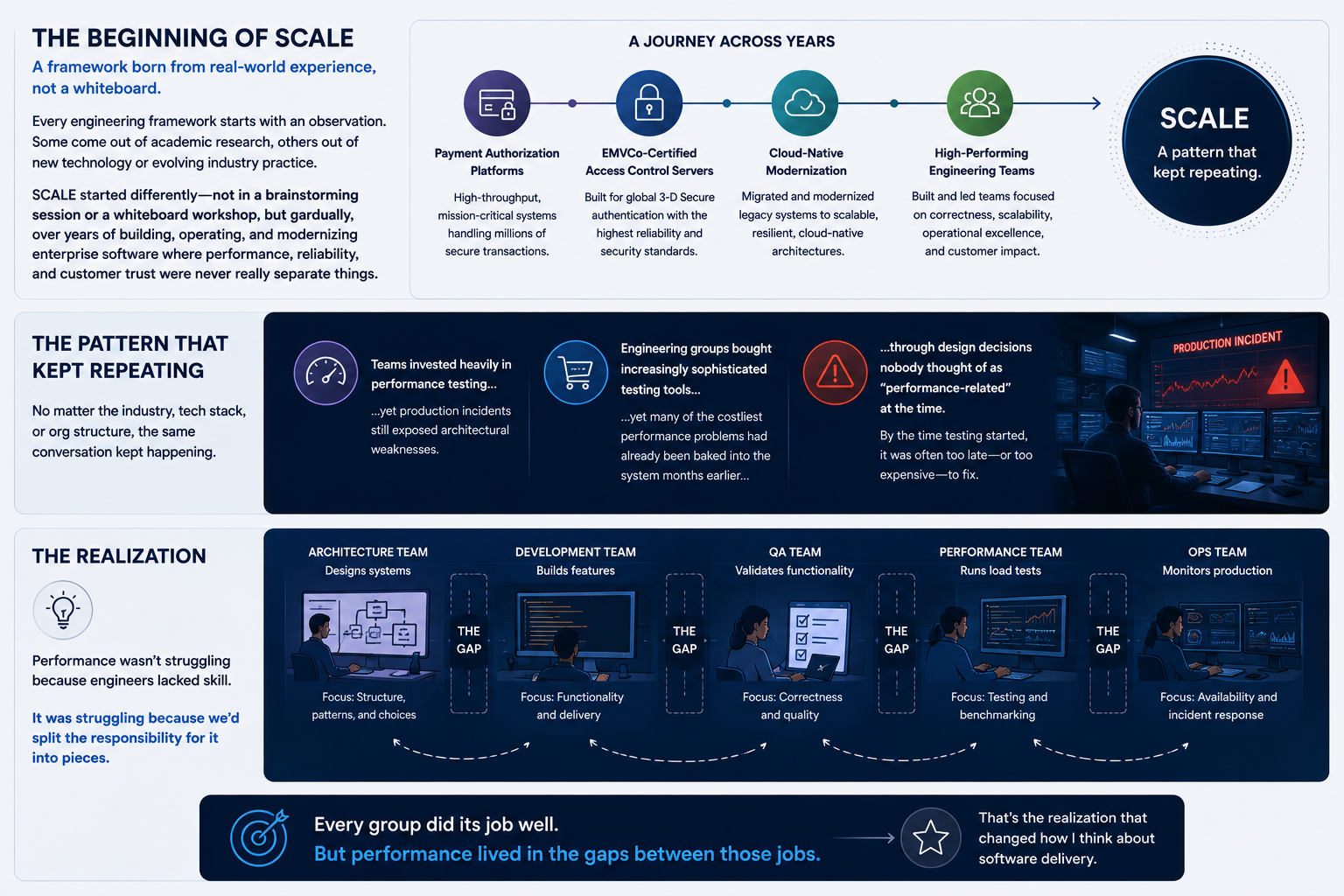
No matter the industry, tech stack, or org structure, the same conversation kept happening. Teams invested heavily in performance testing, and production incidents still exposed architectural weaknesses. Engineering groups bought increasingly sophisticated testing tools, yet many of the costliest performance problems had already been baked into the system months earlier through design decisions nobody thought of as "performance-related" at the time.
The more I sat with that, the clearer it became: performance wasn't struggling because engineers lacked skill. It was struggling because we'd split the responsibility for it into pieces. Architecture teams designed systems. Developers built features. QA validated functionality. Performance engineers ran load tests. Ops monitored production. Every group did its job well but performance itself lived in the gaps between those jobs. That's the realization that changed how I thought about software delivery.
Looking for the pattern
One advantage of spending years in enterprise engineering is perspective. Individual incidents fade from memory; patterns don't.
Going back through architecture reviews, postmortems, modernization programs, and strategy discussions, I noticed the successful systems kept sharing the same handful of traits and those traits had almost nothing to do with programming languages, cloud providers, databases, or which testing tool was in use. They were about behavior.
The strongest engineering organizations thought about performance during architecture, not after implementation. They validated continuously instead of waiting for a release milestone. They designed for scale before demand forced their hand. They treated production as a place to learn, not just the finish line of delivery. And they kept evolving based on what production taught them, instead of assuming today's architecture would hold up forever.
Those same five behaviors kept showing up, across different companies and different problems, until they stopped looking like isolated best practices and started looking like principles.
From best practices to a philosophy
A mistake I've seen a lot in tech organizations is treating engineering practices as separate initiatives one team owns observability, another invests in CI/CD, someone else champions performance testing. Architecture reviews get better, load testing gets better, monitoring gets better, and the organization still struggles, because each improvement is happening in isolation.
Performance doesn't come from any one of those things alone. It comes from how architecture, engineering decisions, delivery practices, operational visibility, and continuous learning all interact with each other. Once I saw that, the question changed. Instead of "how do we improve individual practices," it became "what connects all of these practices together?"
The answer wasn't a new process or a new testing strategy. It was a mindset.
Why five principles
People sometimes ask why the framework settled on five principles instead of three, seven, or ten. The honest answer: nearly every real conversation about performance engineering kept circling back to the same five themes.
Teams needed to think about performance much earlier than they typically did. Confidence couldn't come from one test before release, it had to be built continuously through delivery. Architecture decisions determined far more about long-term performance than any optimization applied afterward. Production wasn't just where systems ran; it was the richest source of information about how they should evolve. And nothing no architecture, no process, no optimization stays effective forever, because software keeps changing and engineering practice has to change with it.
These five ideas came up so consistently that they became the foundation of the framework, not because they were convenient, but because they're simply how the best engineering organizations already behaved.
The five principles
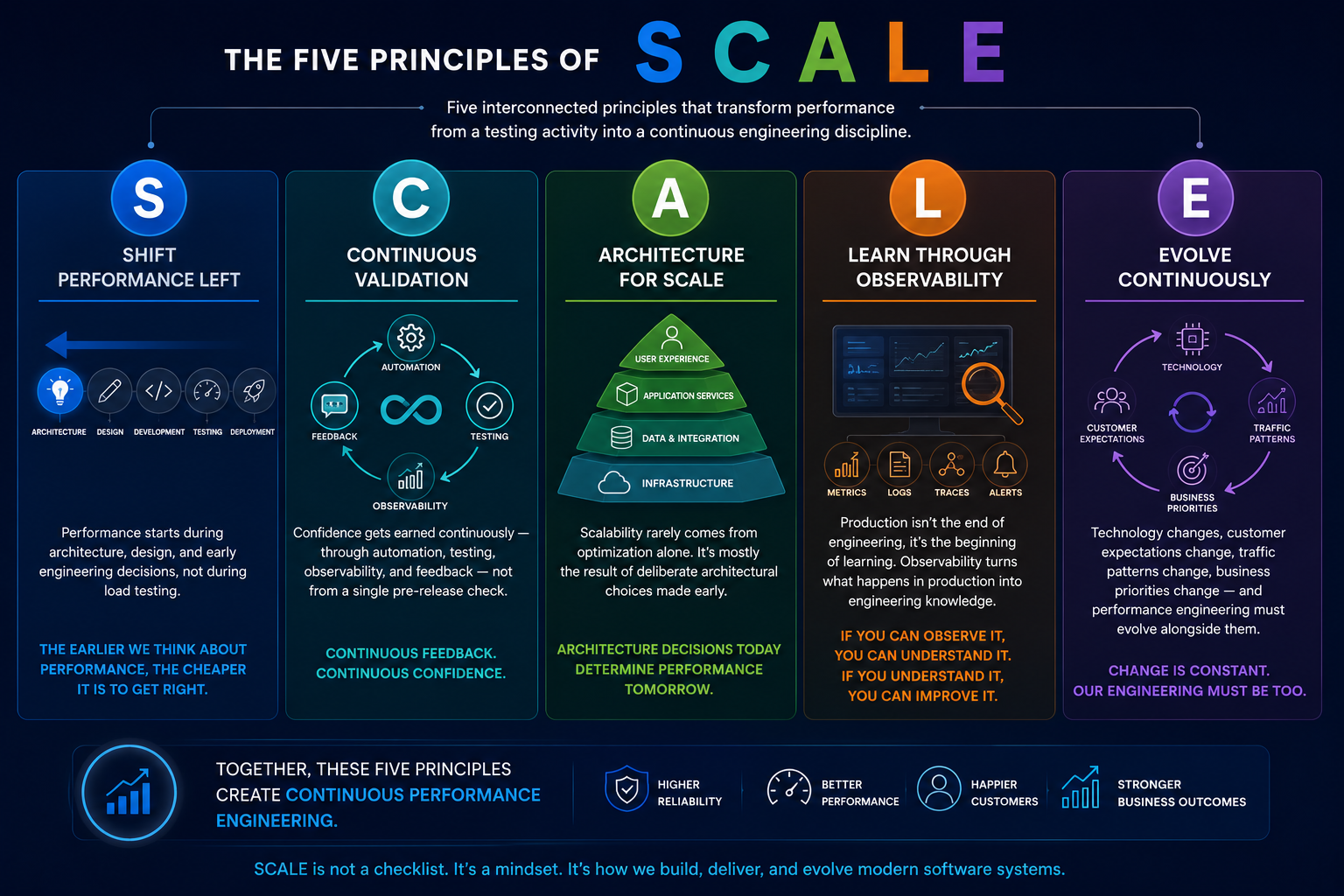
Over time, these recurring patterns evolved into a framework that I eventually formalized as the SCALE Framework, a practical methodology for Continuous Performance Engineering built from real-world enterprise engineering experience rather than academic theory.
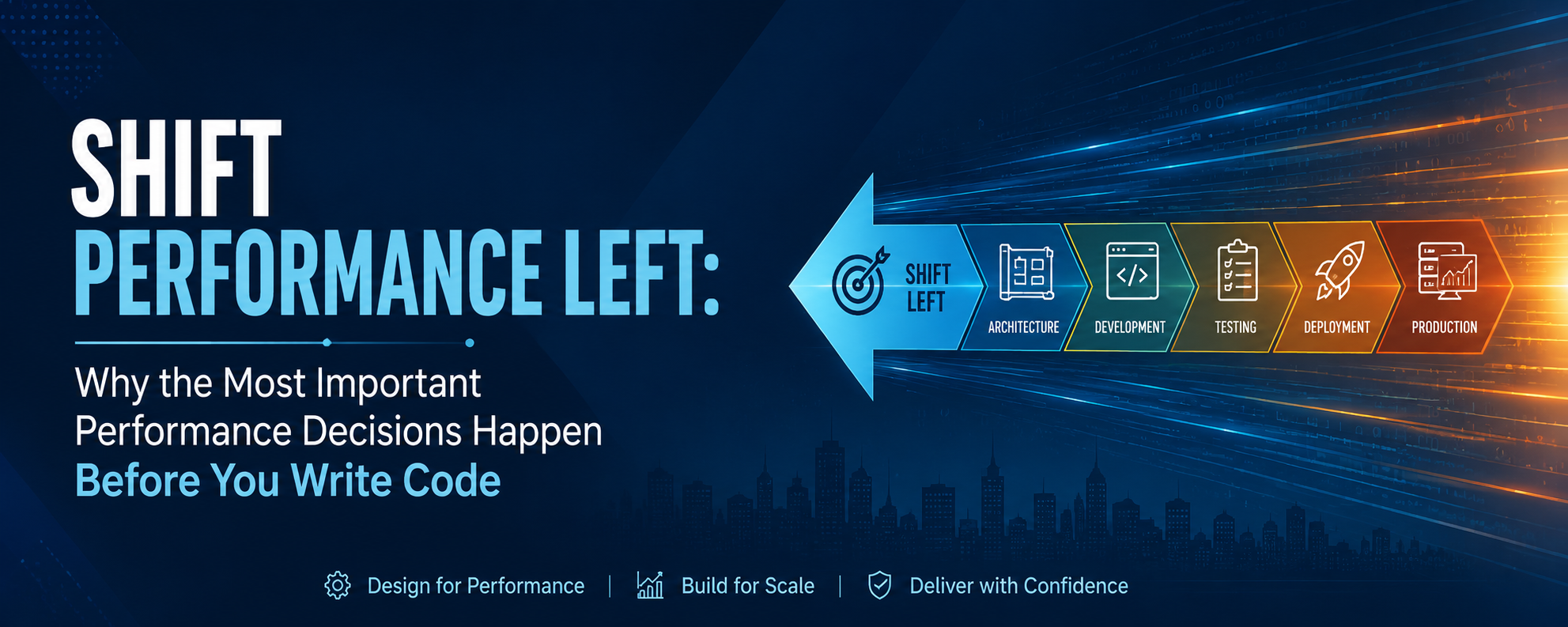
S — Shift Performance Left. Performance starts during architecture, design, and early engineering decisions, not during load testing.
C — Continuous Validation. Confidence gets earned continuously through automation, testing, observability, and feedback, not from a single pre-release check.
A — Architecture for Scale. Scalability rarely comes from optimization alone. It's mostly the result of deliberate architectural choices made early.
L — Learn Through Observability. Production isn't the end of engineering, it's the beginning of learning. Observability turns what happens in production into engineering knowledge.
E — Evolve Continuously. Technology changes, customer expectations change, traffic patterns change, business priorities change and performance engineering has to keep evolving alongside all of it.
More than an acronym
At first glance, SCALE might look like just another framework built around a catchy acronym, and I get that reaction, the industry has no shortage of those.
What makes it different is that it wasn't designed to introduce brand-new practices. Nearly every principle already exists somewhere in modern engineering: shift-left testing, continuous integration, observability, cloud-native architecture, operational feedback, engineering evolution. None of that is new.
What was missing was a single way of thinking about all of it through the specific lens of continuous performance engineering. SCALE doesn't replace those existing practices, it connects them.
A framework for the AI era
One of the strongest validations for the framework came from an unexpected direction. As AI-assisted development, autonomous agents, and increasingly intelligent platforms became common, I found these principles didn't get less relevant if anything, they got more relevant.
AI can write code faster than ever, but it can't guarantee an architecture will scale. It can optimize algorithms, but it can't replace what you learn from production. It can automate testing, but it can't replace engineering judgment. As software gets more autonomous, the need for disciplined engineering principles only grows. That's why I think continuous performance engineering matters more over the next decade than it did over the last one.
Looking ahead
This article covered the philosophy behind SCALE. The ones that follow will walk through each principle individually not as standalone techniques, but as connected pieces of one continuous discipline.
We'll start where every successful system starts: not with performance testing, not with optimization, but with architecture. Because before software can perform well in production, it has to be designed to.
Next up: the first principle, Shift Performance Left, and why the most important performance decisions get made long before anyone runs a load test.
SCALE Insight
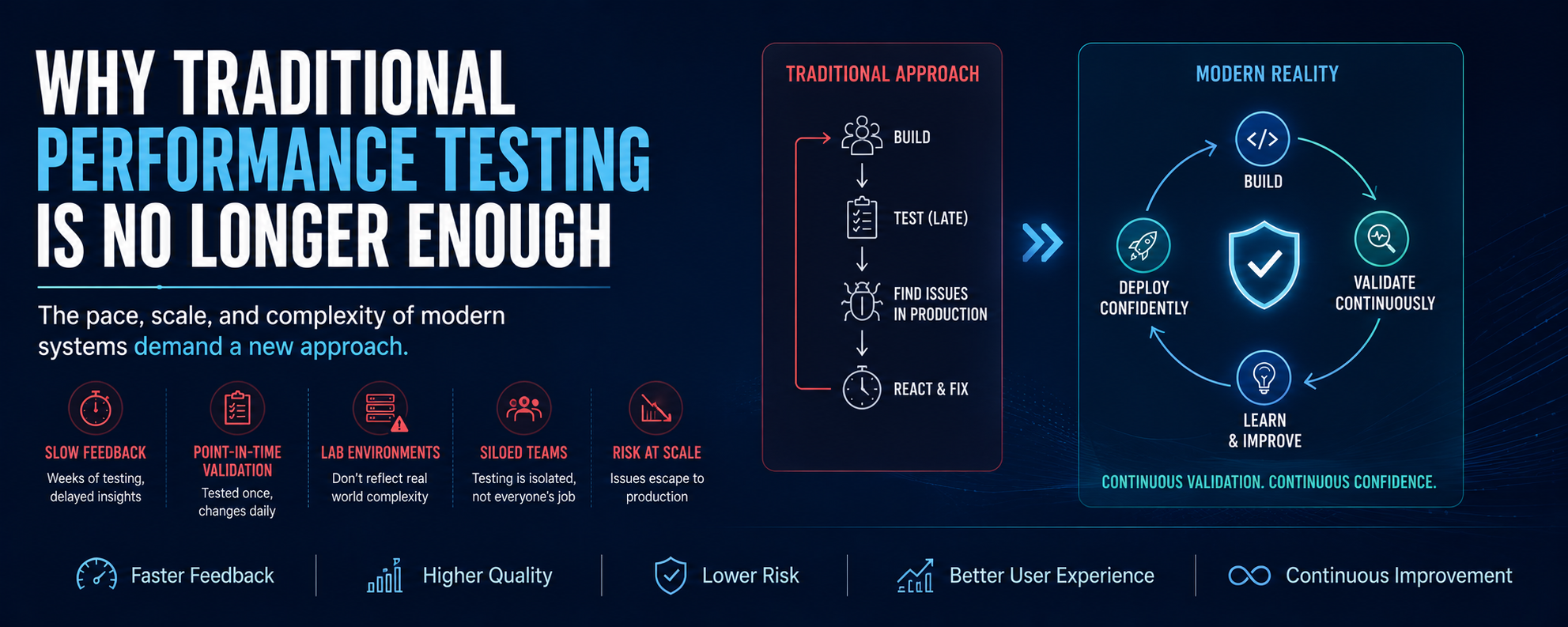
Traditional performance testing remains essential but it validates software at a moment in time. Modern engineering teams need something broader: a continuous approach that begins with architecture, learns from production, and evolves with every change. That is the shift from Performance Testing to Continuous Performance Engineering.
Next in the SCALE Framework Series
Article 4 – Shift Performance Left: Why the Most Important Performance Decisions Are Made Before the First Line of Code
Previous read
The SCALE Framework
Why Traditional Performance Testing Is No Longer Enough
Suggested next read
The SCALE Framework
Shift Performance Left: Why the Most Important Performance Decisions Are Made Before the First Line of Code
Comments (0)
No comments yet. Be the first!